

You’re receiving this message because you signed up to receive email updates from me, Liam Sarsfield, about my clothing project, Liet MFG. I’m still hard at work on Liet — in fact, I’m currently in Porto (a beautiful place over-run by influencers) sourcing factories. Thanks for following along.
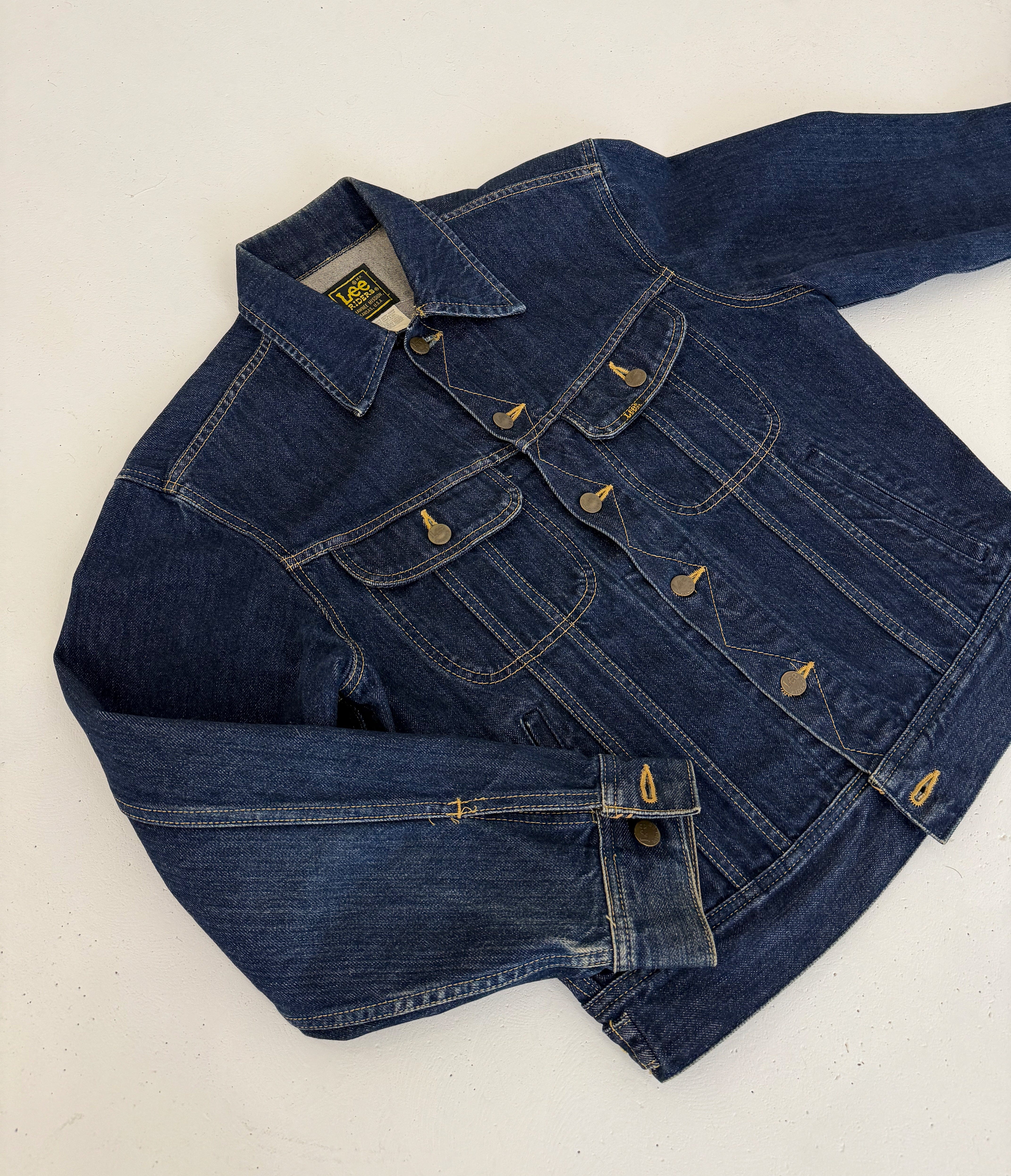
Are you a vintage Lee guy or a vintage Levi’s guy? Preference for one over the other might be a personal failing. It might also be taste.
When I started Liet in 2022, I started by drawing flats. Collars and pockets mostly, which I drew on a grid. Pocket edges lined up, and grid squares determined margins. I biased toward making the arrangement of geometric shapes make rational sense on the page. It was Brasilia—the notoriously anti-human city designed with a high-modernist geometric layout—but for clothes.
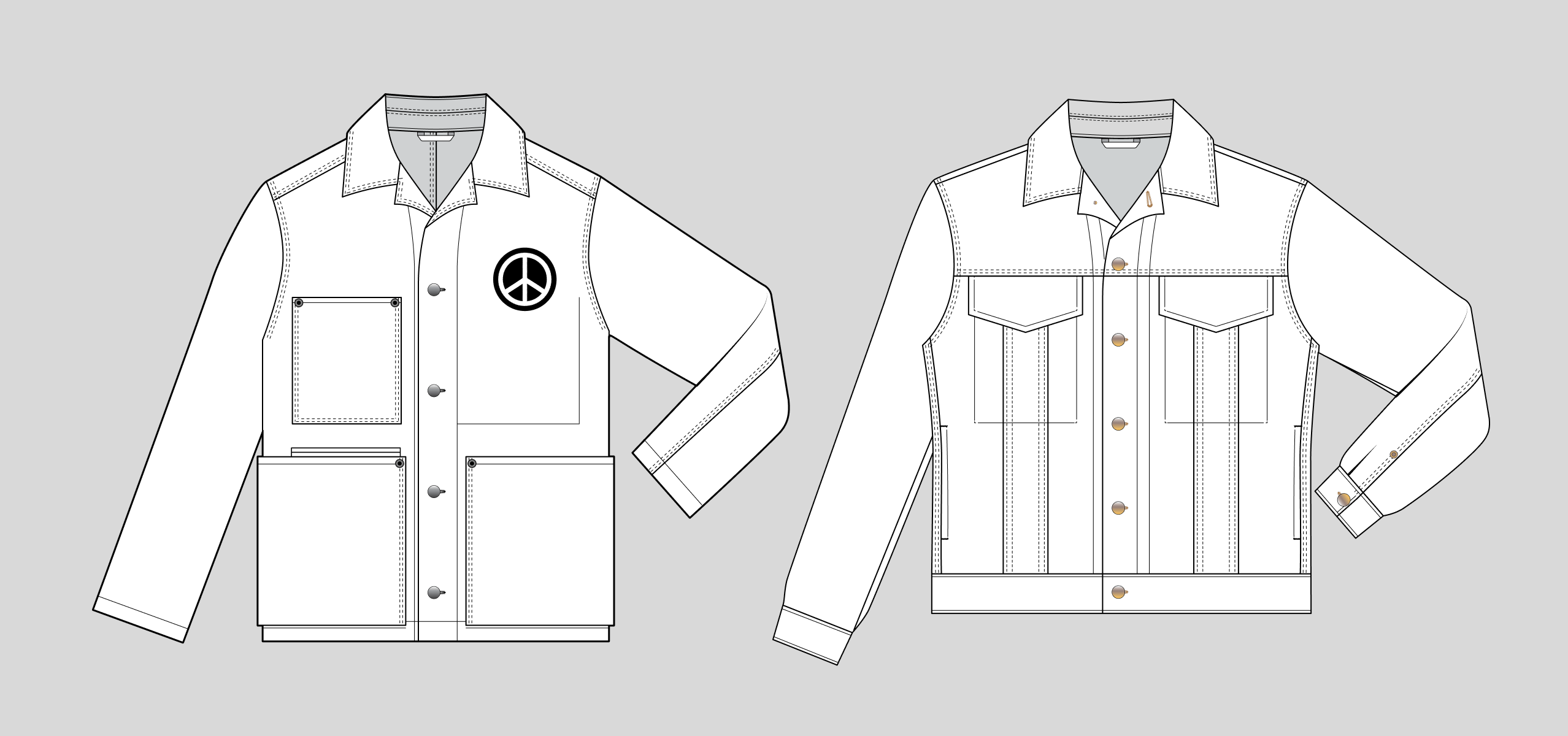
The trouble is that bodies are not very geometric — nor are they very modern. In fact, the human body is a joyous indictment of the idea that the universe can be easily subdivided into squares. Clothes are three dimensional, and sometimes asymmetrical, because that’s the way that our bodies are. This defines their art, and it holds true whether you’re designing a bespoke suit, or a universal chore coat.
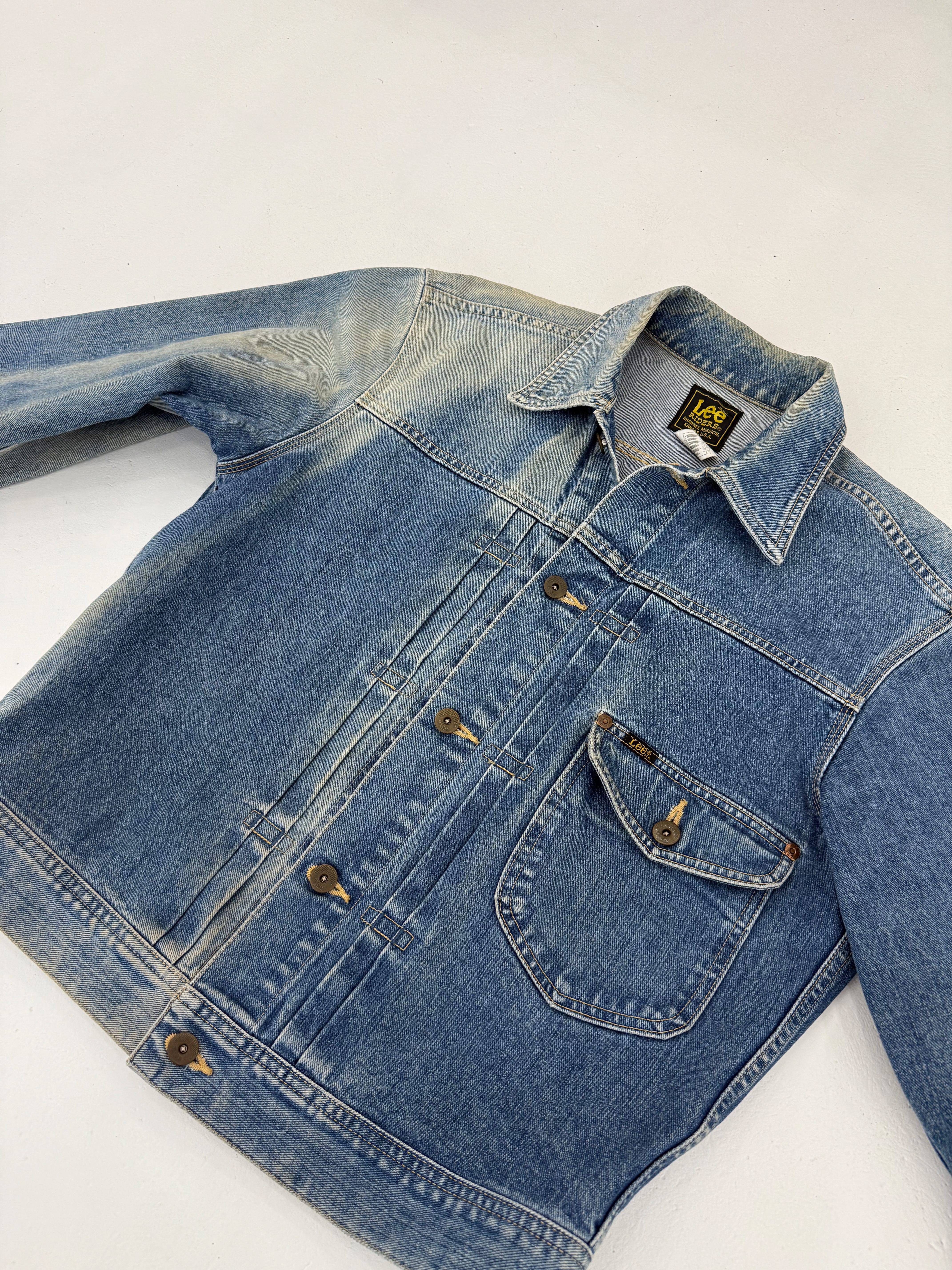
Compare these two trucker jackets. On the left, Levis’ best-selling Type 3. On the right, Lee’s best-selling Riders jacket.
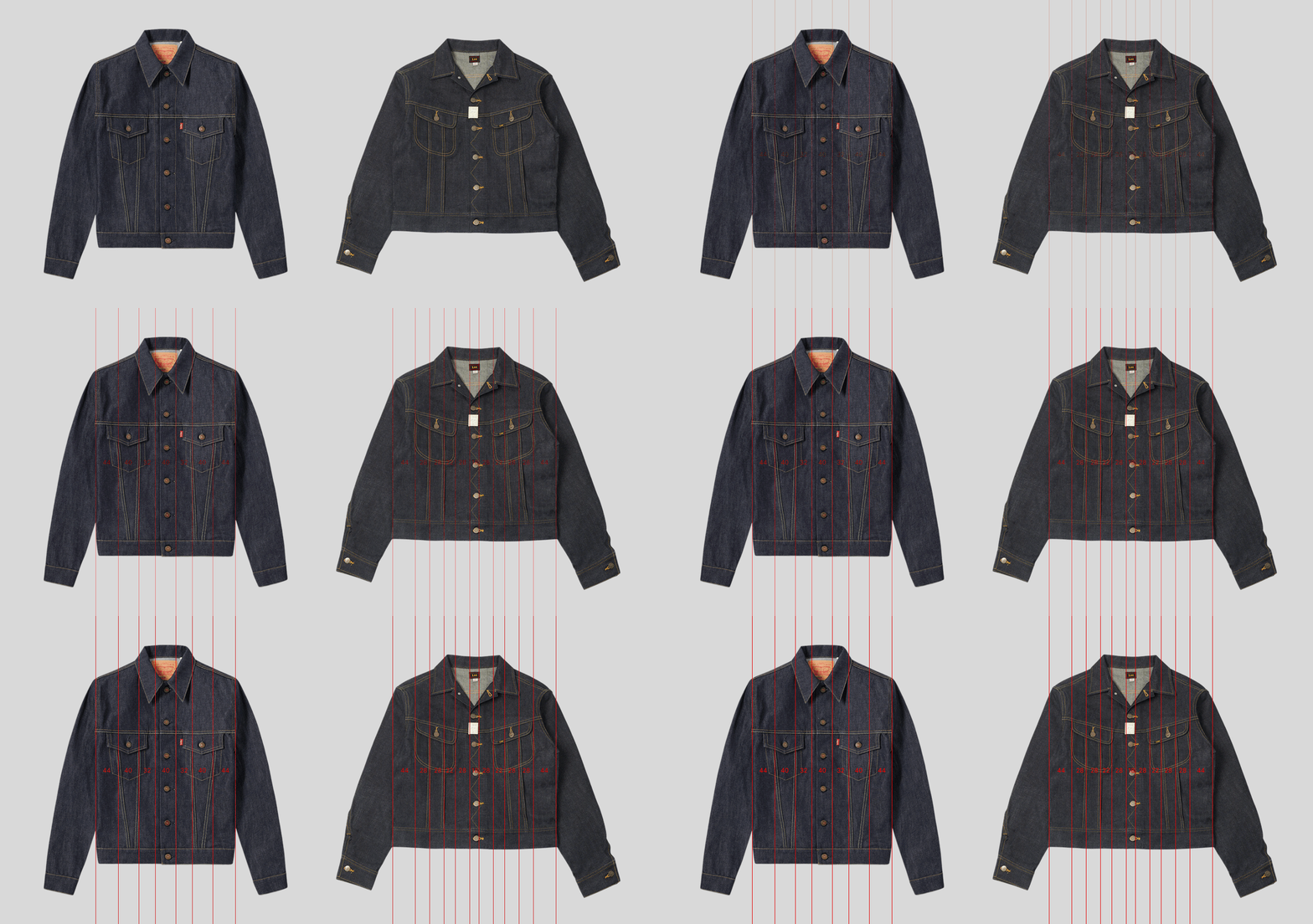
The jacket on the left is fully symmetrical and it’s reducible to a grid unit of 4. The jacket on the right is internally asymmetrical when divided in half, and then mirrored. It’s got enough symmetry to remind you of a tiger’s face, but not enough that the face dissolves into mere shapes (chomp!). The Lee jacket is reducible to a grid unit of 2, which barely feels like a grid unit at all.
The beauty of the Lee—and I think this is true of most classic Lee designs—is the way that organic shapes and asymmetry combine to create something that more elegantly accommodates the human meat body. Here’s a quick napkin comparison:
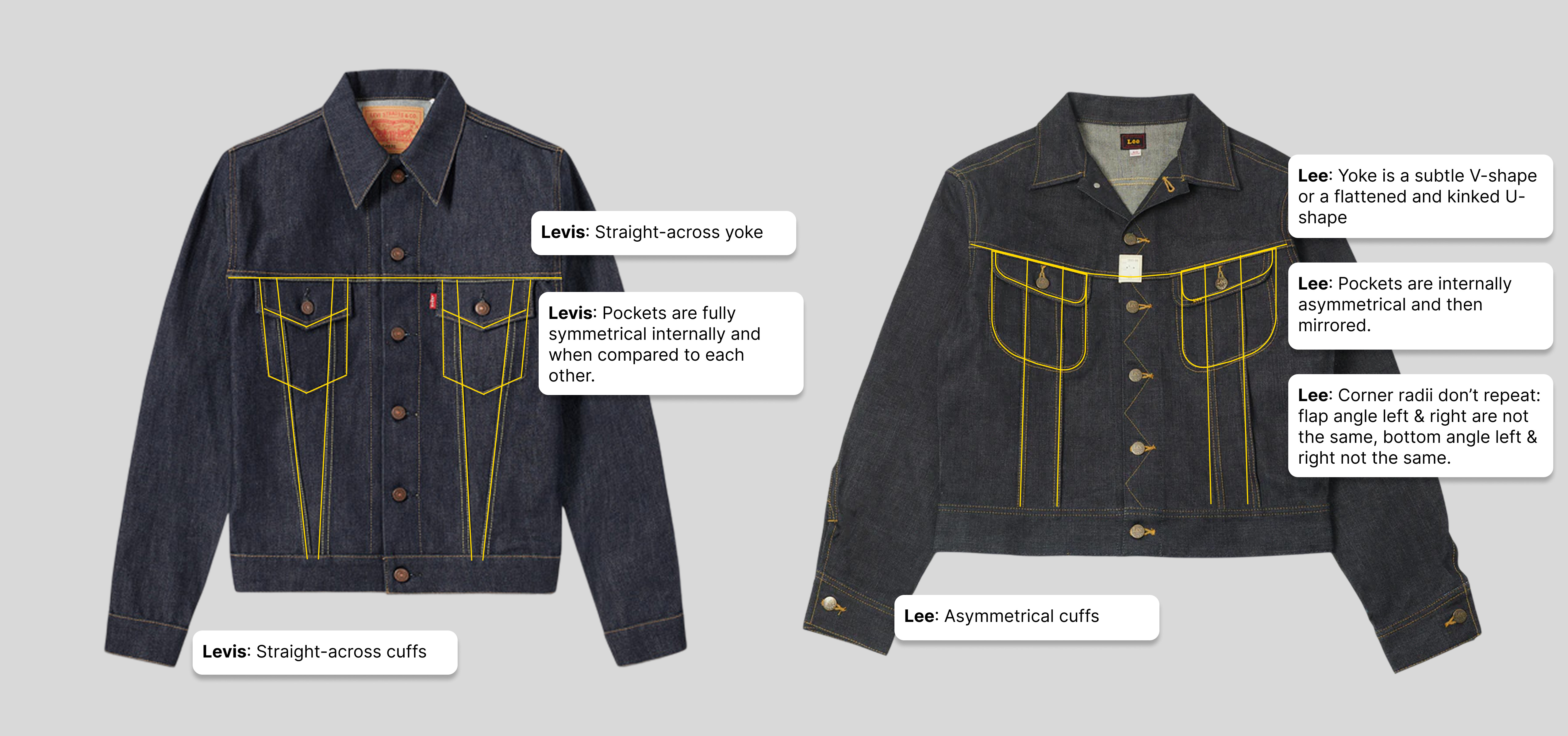
It’s not that the Lee is entirely devoid of “inorganic” shapes: the shoulders and the hem define a rectangular space, and the saw-toothed zig-zag up the front sharply contrasts to the glandular rounding of the chest pockets. But the point is that it all somehow works. It’s a complex composition that flatteringly maps onto you, the wearer. This requires much more finesse than merely drawing a bunch of boxes on the front of a coat. This is why I love Lee. Someone had some fun designing these things — someone thought of them as more than just a collection of lines. They pursued that vision with ambition and with risk.
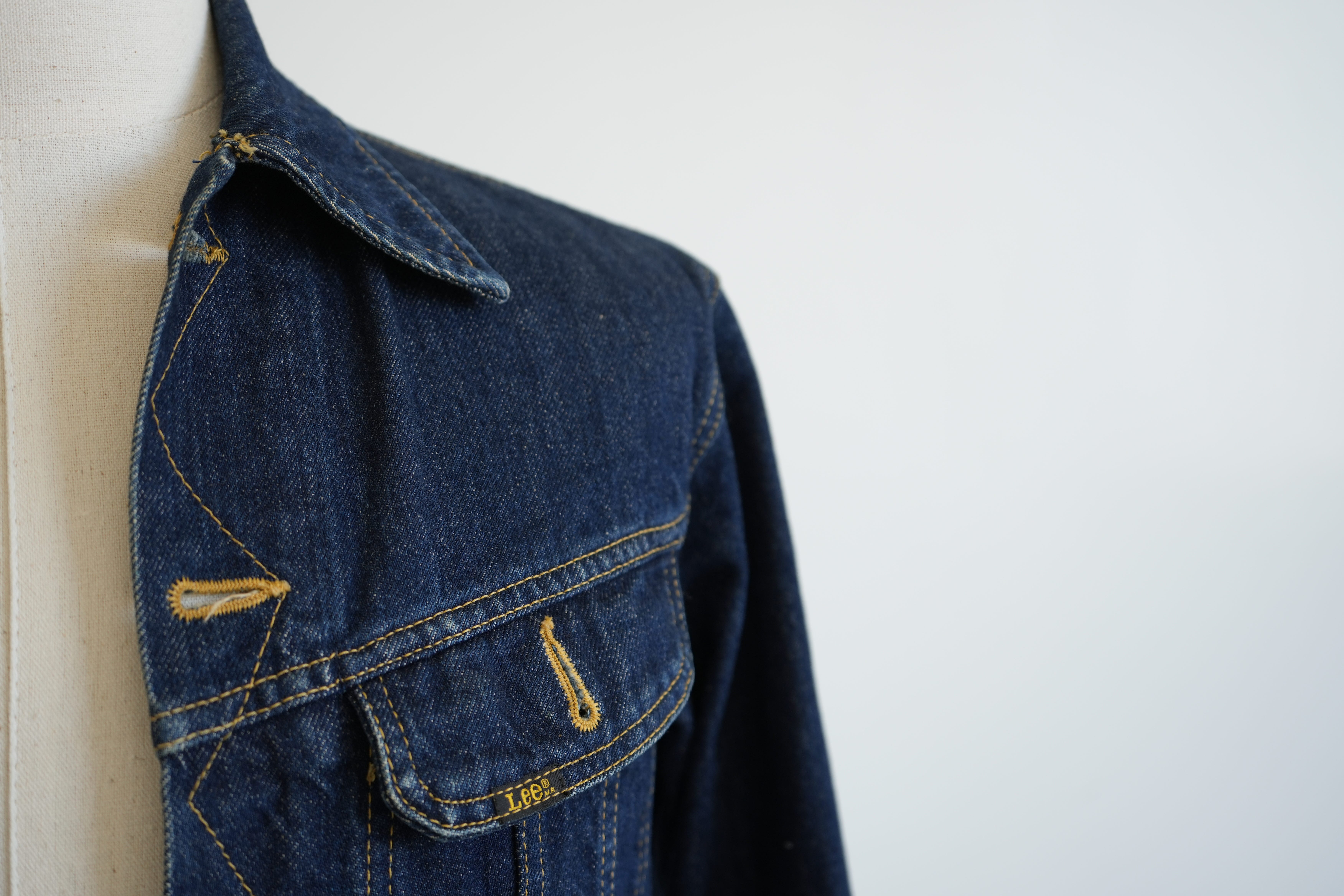
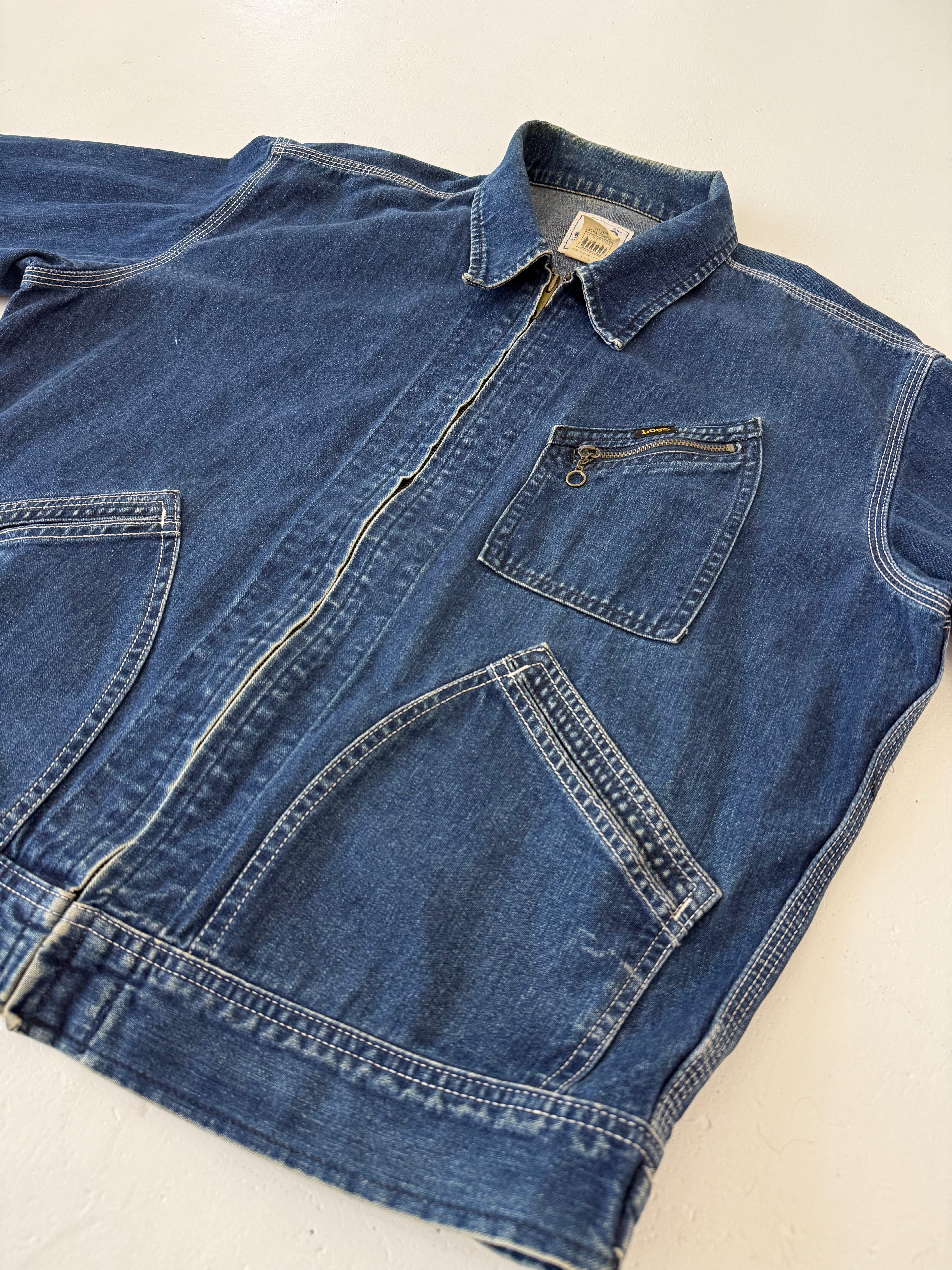
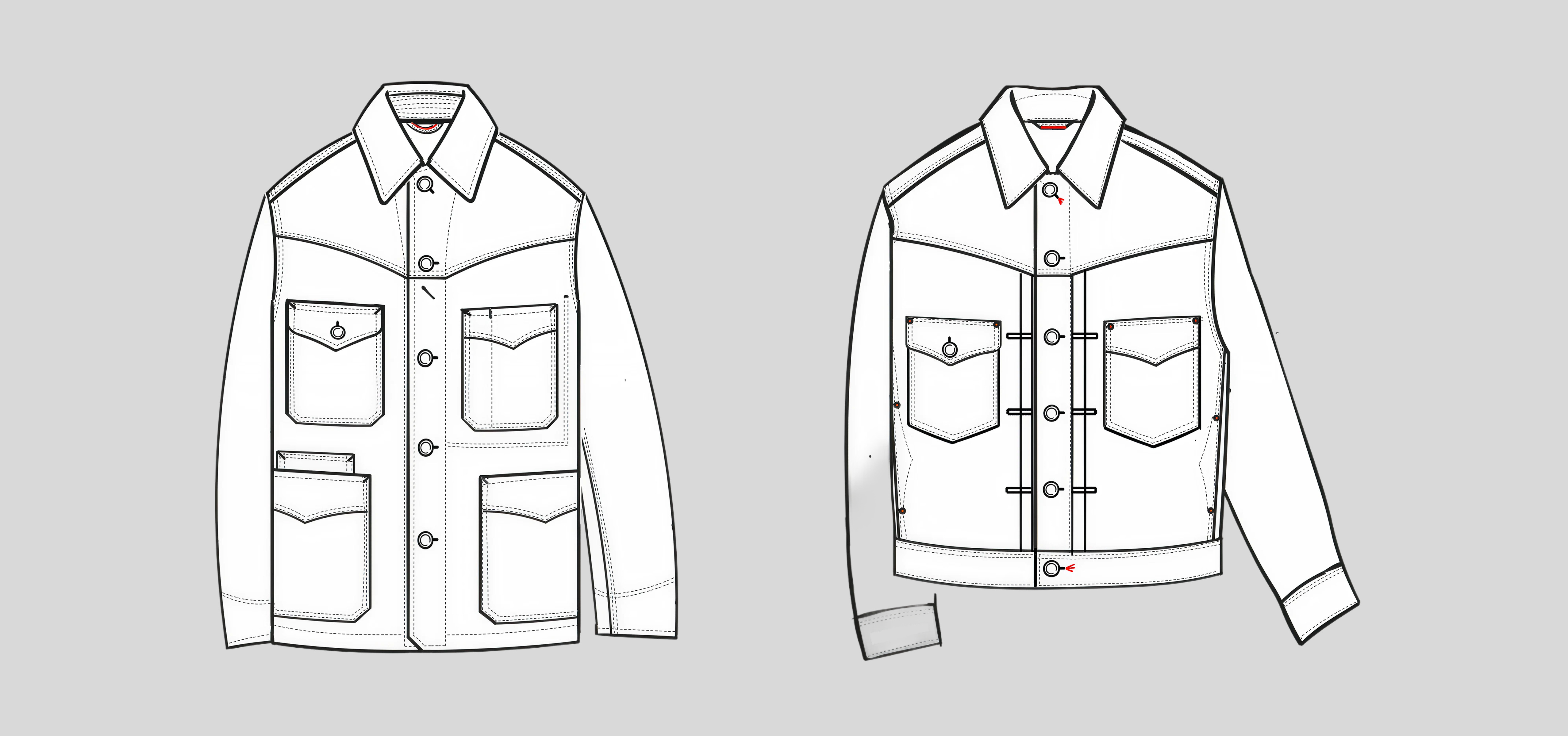
Revisiting Liet’s chore coat and trucker after exploring vintage Lees for awhile brought me to the conclusion that taking the design of our denim pieces seriously meant finding a new way to play off of the body. It meant introducing organic shapes, and making, and breaking, the grid. I’ll break down those decisions in a few months—we’re not quite ready for that yet. In the meantime, here’s a little preview. Better?
Thanks for reading.
—L