

I’ve just returned from a 7-day odyssey in Porto and its surrounding areas. Beginning of October, a beautiful 25 degrees. Best-in-class Brutalist and modernist architecture nestled in meandering rows of traditional Portuguese townhomes and tile work, brought down to earth by colourful graffiti—some in English, some in Spanish, plenty of it in Portuguese. None of it telling me to go home. Thank god. A place so good it describes itself.
Our host is Ricardo, Liet’s agent in Portugal, a fourty-something who is really a fifty-something and whose experience in the Portuguese garment business is multi-generational. We cruise around in his soon-to-be vintage Mercedes. Old enough to not look like an SUV. New enough that he can flick between incoming phone calls on the radial dial on the old-tech console. He speaks with a calm seen-it-all-before voice, to his secretary, to his factory contacts, to his many friends in the restaurant business. We’re small fish for Ricardo, but he treats Frances and I like we’re the next YMC. Maybe we are. I hope we are.
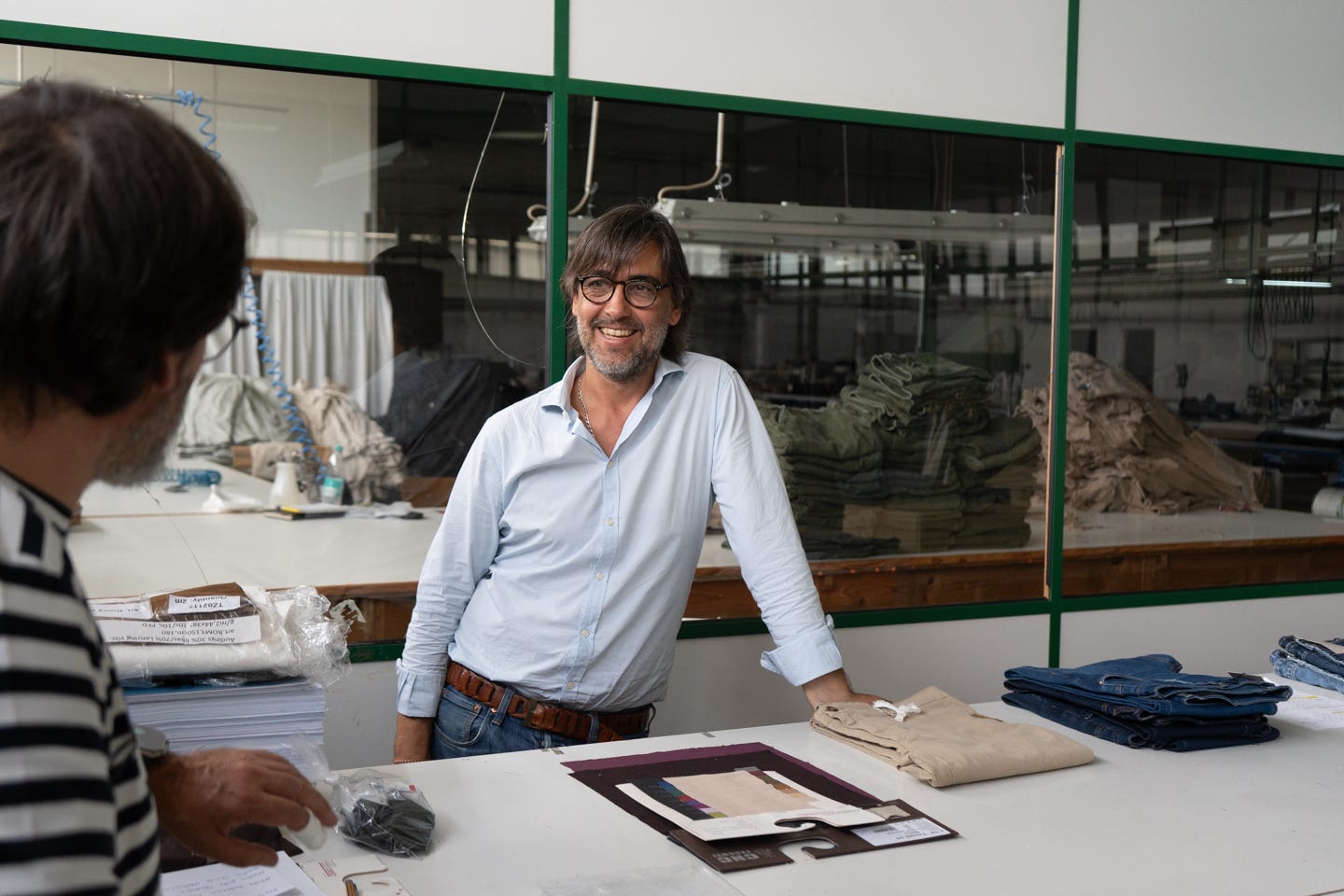
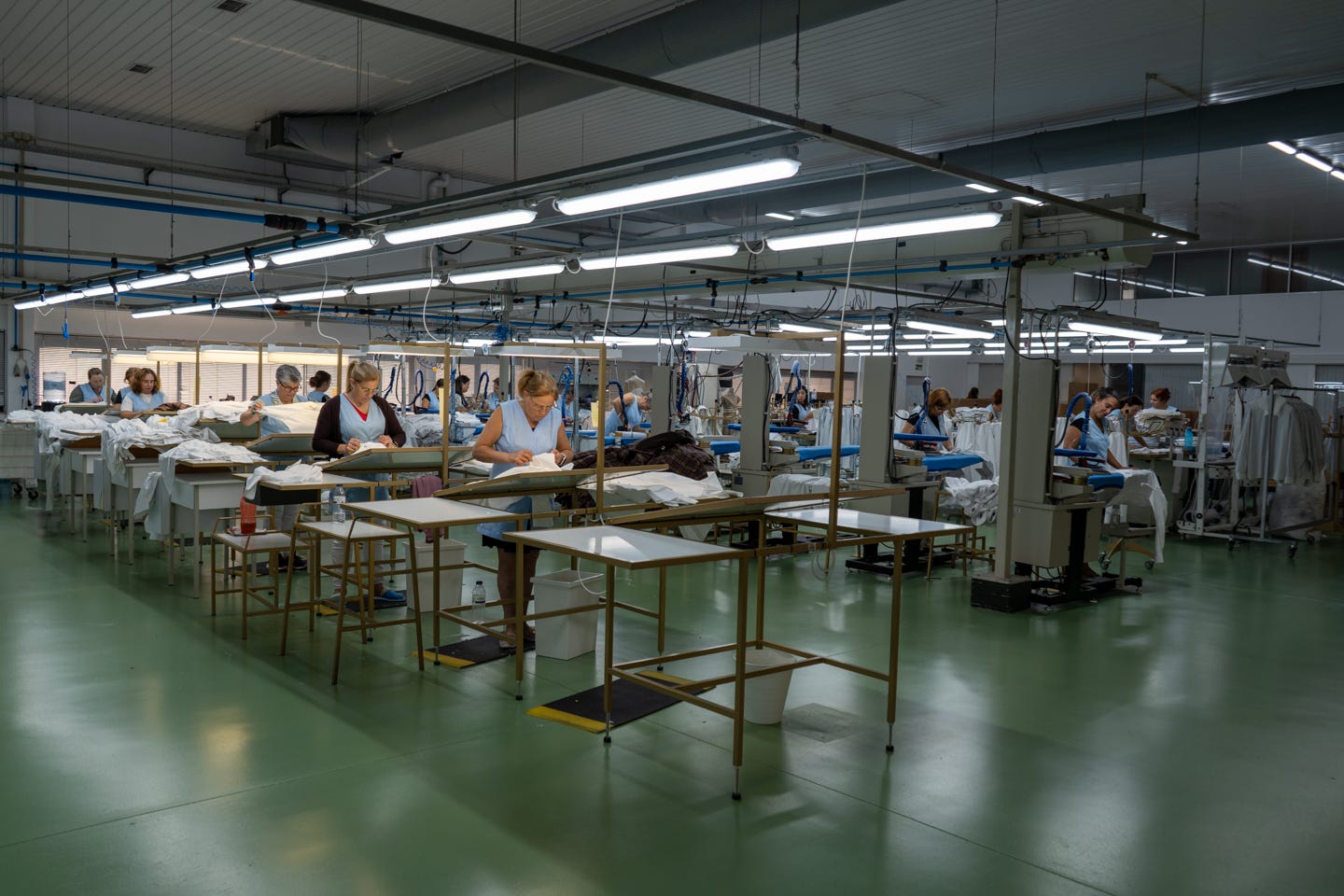
I will say it plainly: Porto is a bright shining heaven for garment manufacturing entrepreneurs like me. Within 100 square kilometres you can find best class textile manufacturers, label makers and branding experts, button and trim manufacturers, and specialists in just about every type of garment manufacturing. Many of these facilities are state of the art, bright, clean and staffed by multiple generations of Portuguese. They’re still willing to accept lower minimum order quantities, and crucially, many seem to still be owned and operated by their founders.
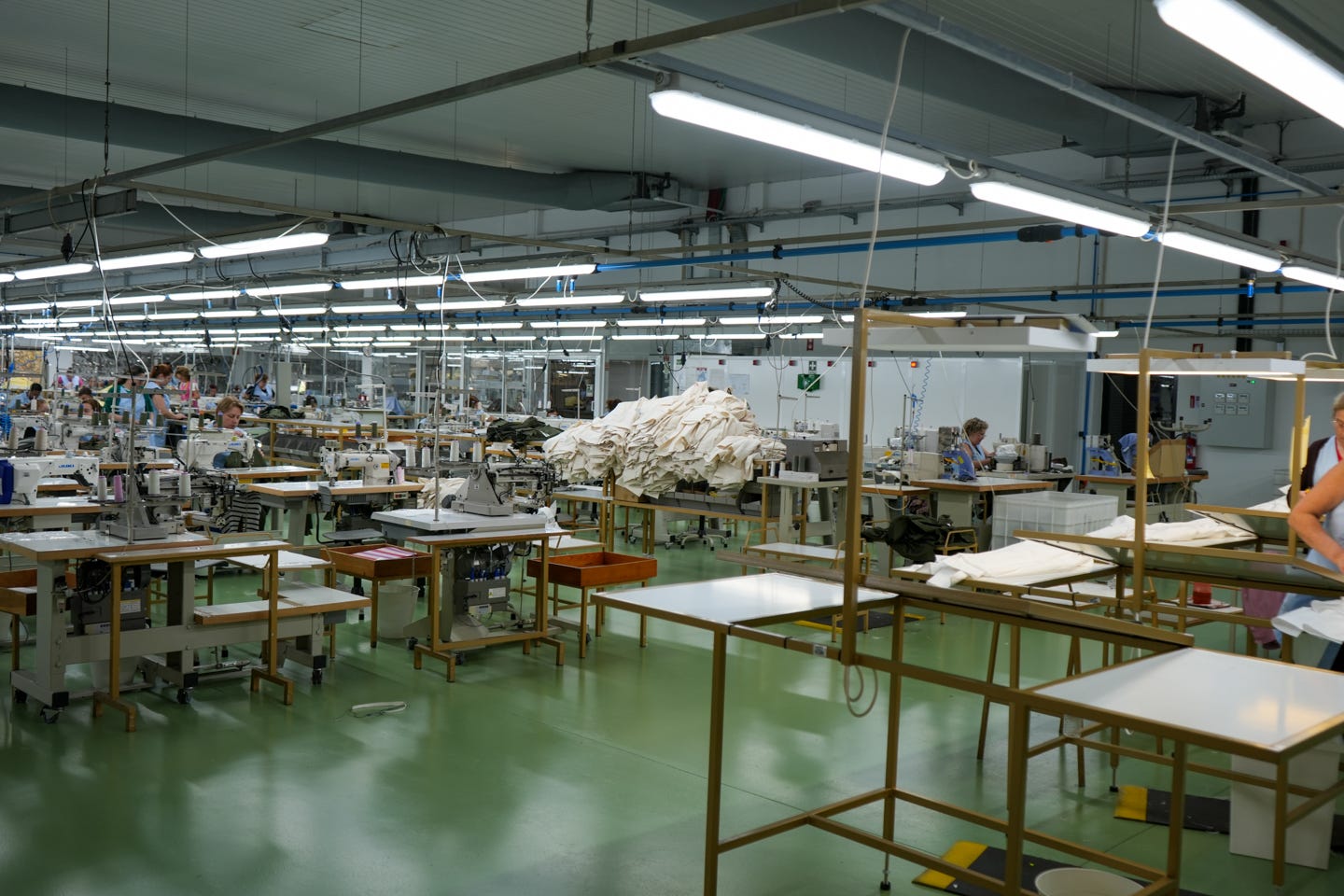
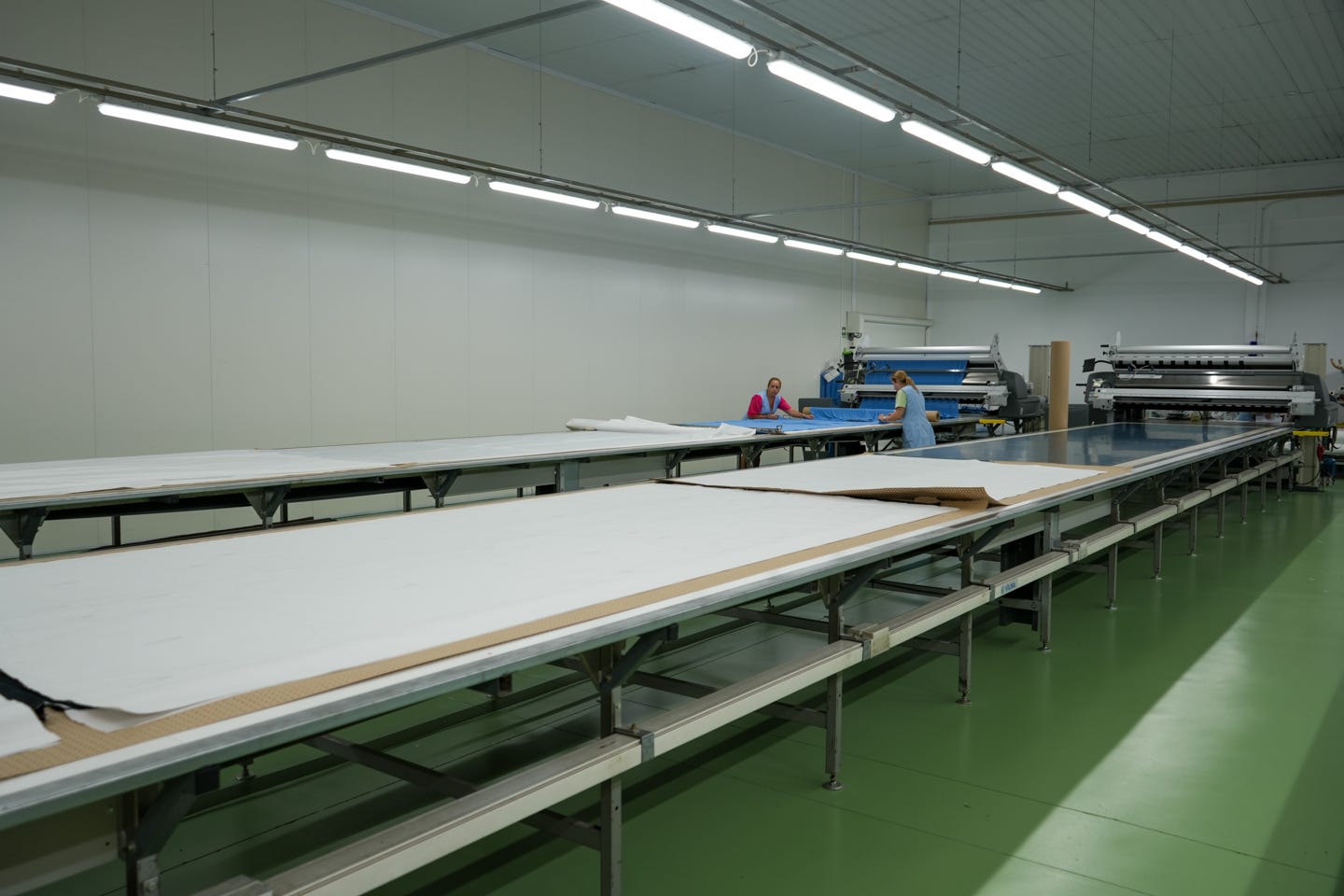
One has the distinct sense touring these facilities that Portuguese manufacturing has a future. A facility that we toured was pre-empting EU regulation that comes into effect in 2030 that requires every aspect of a garment’s manufacture to be traceable through a little QR code attached at the hem. They’re preparing for this five years in advance, and they’re already marketing it as a competitive advantage to prospective clients like me.
And boy is it a competitive advantage! Either you can have denim made by poisoning rivers and hidden behind a veil of capitalist secrecy and lies, or you can have something made by a person paid properly in a place where they can afford the things they need, and where almost every aspect of that work is transparent and monitored for waste.
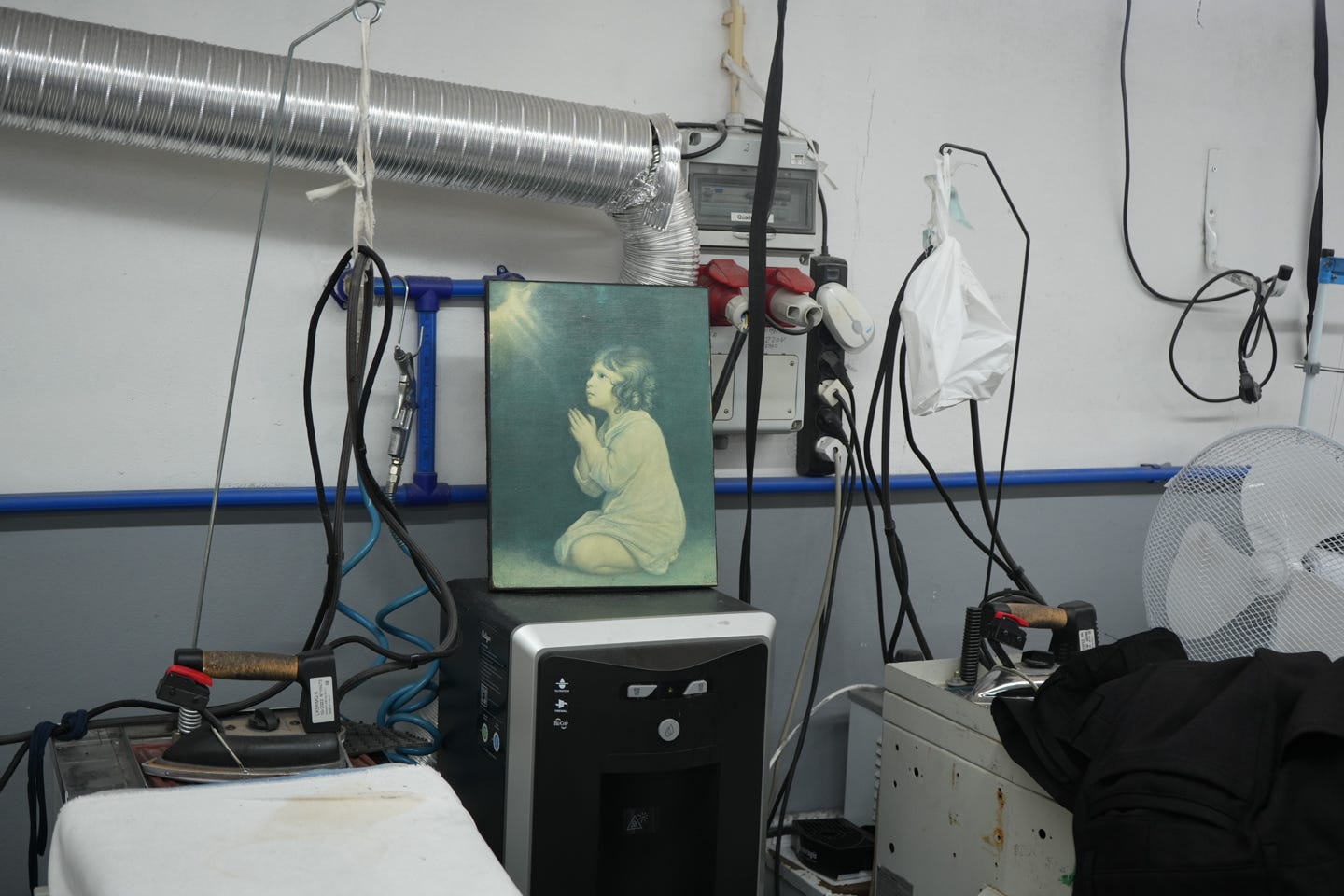
This is precisely the type of place where I want Liet garments to be produced. A place where the cost of production is still in line with the costs of consumption. It’s a mystery to me that North America abandoned this “Fordist” model, turned against domestic industry and standards, and decided to import waves of cheap shit made under often terrible circumstances.
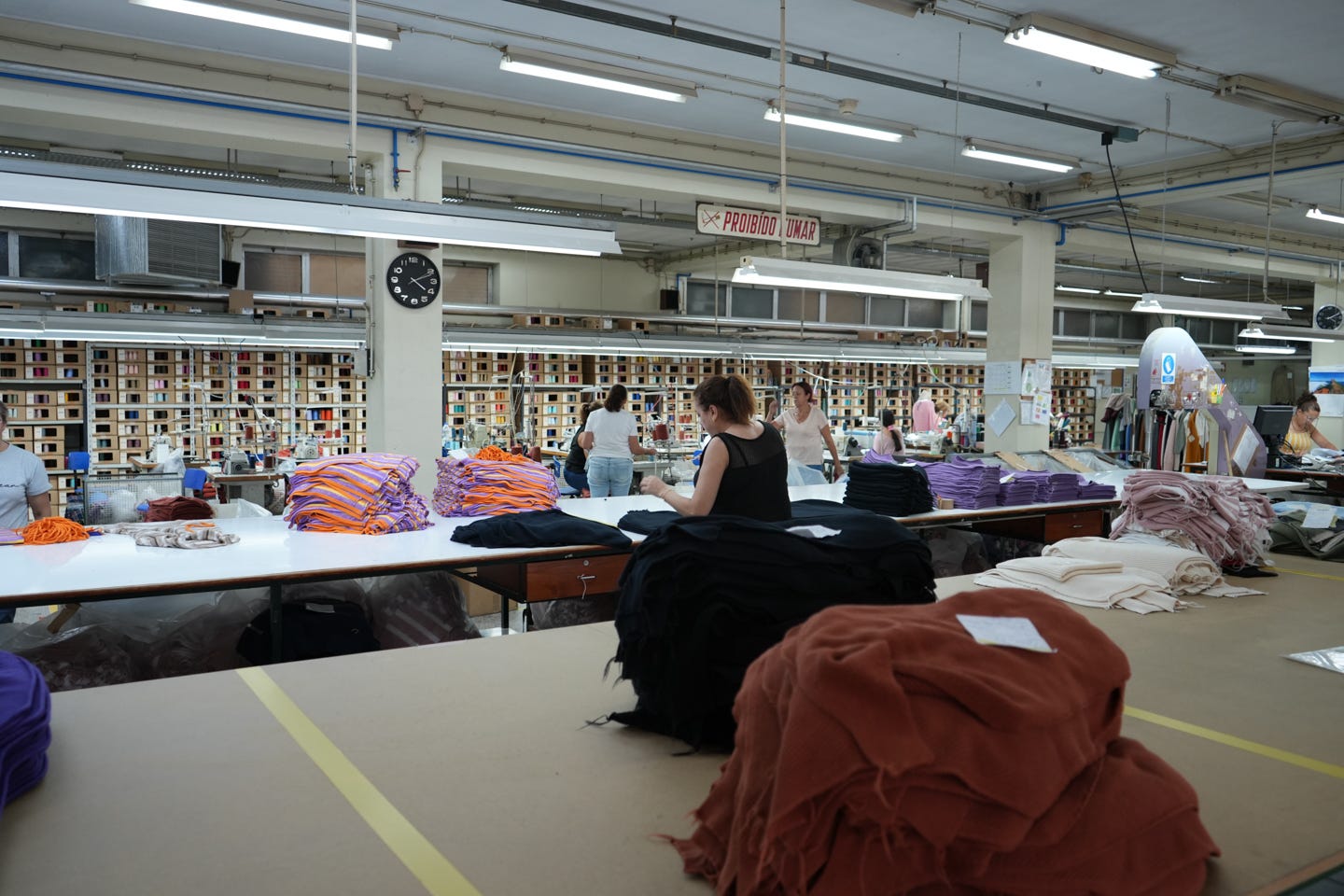
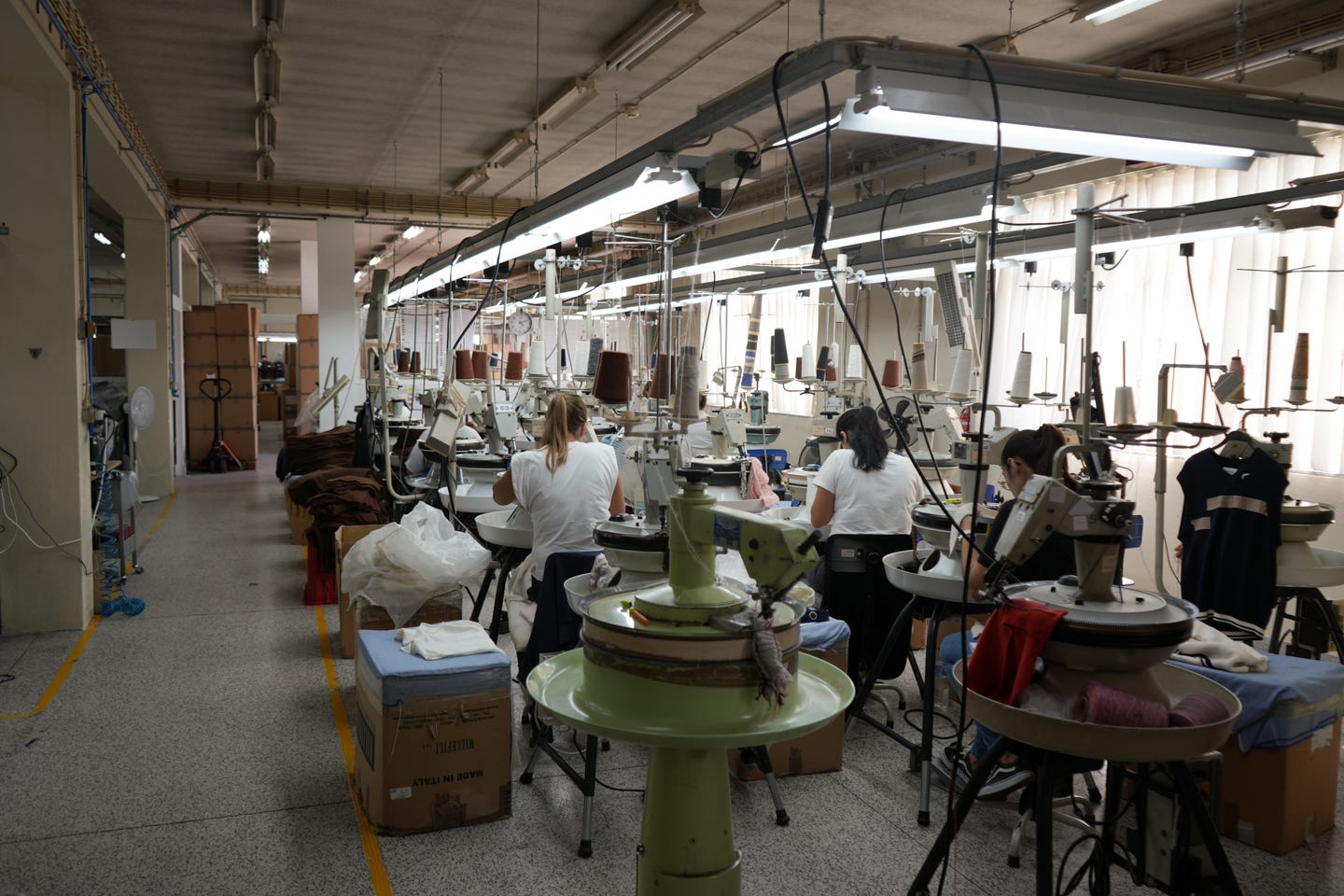
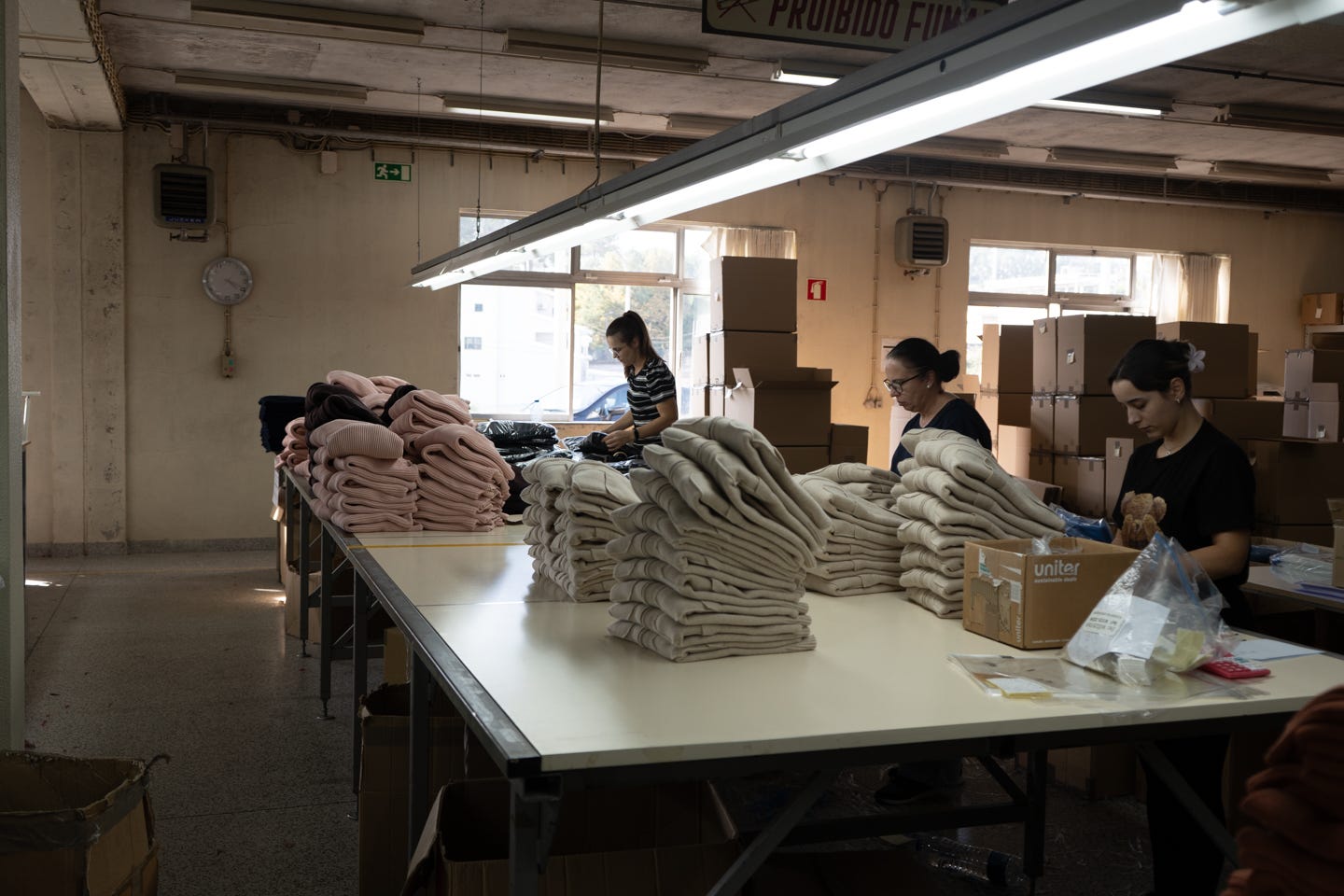
It’s exhilarating to be in a place where you have everything that you need to start a clothing company, and where it doesn’t feel like you’re trying to do something outmoded or impossible. There’s no great sucking sound here, just the sound of the waves far off.
These are the thoughts that I think as I devour a small box of Natas on a stoop outside of a closed real estate agents office in Porto. An American couple ambles up to see if they can stay on vacation forever. I brush the pastry off and take a look myself. Vacation forever could be nice, but it’s time to get back to work.

Great post. It's not really a mystery as to why this kind of manufacturing was abandoned. Corporations prioritize wider profit margins over sustainability and local economic stability. The editor in me won't let you get away without pointing out it should say "forty-something." ;)